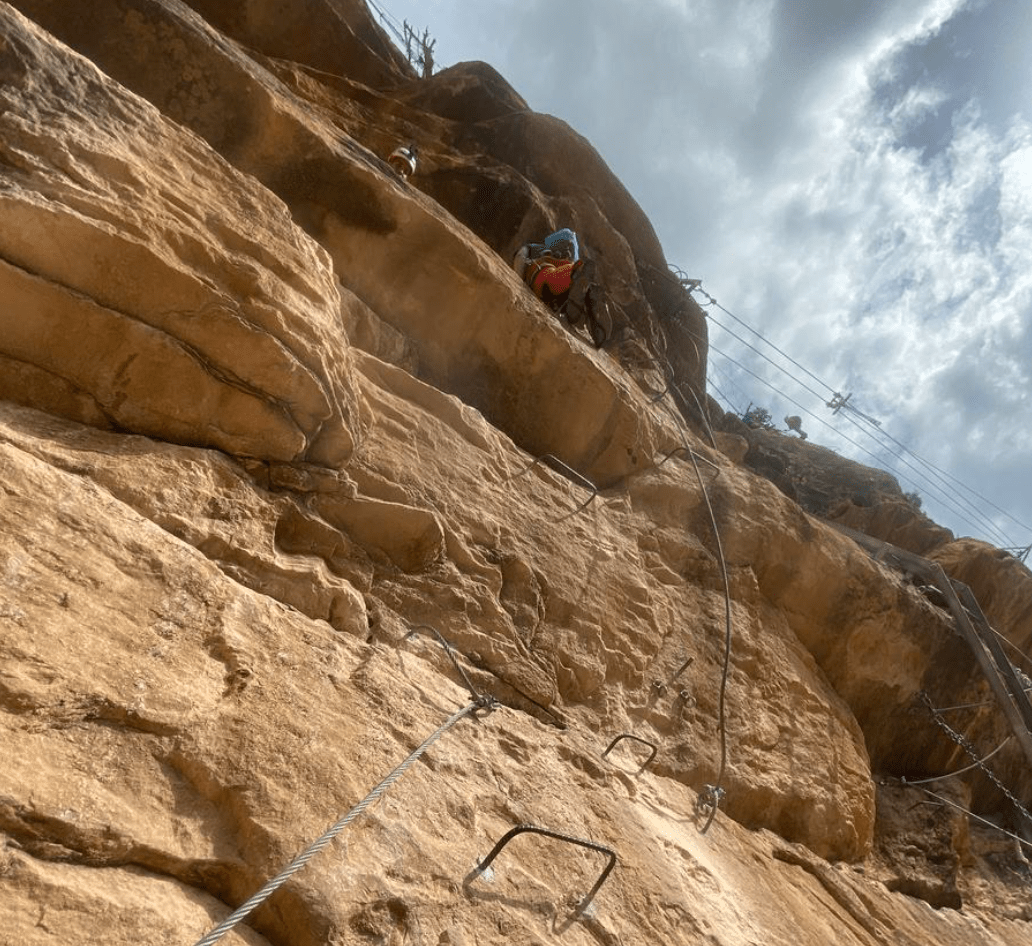
Catalunya has some of the best via ferratas in Europe, most of them within an hour or two of Barcelona. Whether it's your very first cable or you're hunting the hardest K5 overhangs, go with a certified guide.
A via ferrata — Italian for "iron path" — is a mountain route equipped with a continuous steel safety cable, plus metal rungs, staples, ladders and bridges fixed into the rock. You wear a harness and a shock-absorbing lanyard clipped to the cable, so you're protected the whole way up.
It sits somewhere between hiking and rock climbing, and that's exactly the appeal: you get the height, the exposure and the summit of a climb without needing to know how to climb. The first via ferratas were built in the Dolomites during the First World War to move troops through the mountains; today they're one of the fastest-growing mountain sports in Europe, and Catalunya has become one of its best playgrounds.
Within easy reach of Barcelona you'll find sea cliffs, conglomerate canyons, cave traverses and one of the longest ferratas in Spain — a genuine variety of rock and character that few regions can match. Most of our routes are 45 minutes to two hours from the city, which makes a guided via ferrata one of the best day trips from Barcelona for anyone who wants real adventure without a long drive.
Going with a certified guide means the gear is provided and correctly fitted, the technique is taught properly from the first clip, the route is matched to your actual level, and — increasingly important in Montserrat — the access permits and regulations are handled for you. You show up and enjoy the exposure; we carry the responsibility.
Via ferratas are graded on the K scale, from K1 to K6. The grade reflects how steep and physically demanding the route is — not how dangerous it is, since you're clipped to a cable throughout. Here's what each level actually feels like:
Easy. Mostly walking on protected paths, with cable where the ground drops away. Suitable for almost anyone with a head for heights.
Moderate. Short vertical sections with plenty of rungs and good footholds. A comfortable first ferrata.
Difficult. Sustained vertical climbing, real exposure, and some pulling with the arms. Fine for a fit beginner with a guide.
Very difficult. Long vertical or slightly overhanging sections where arm strength genuinely matters, often with fewer rungs. You should be fit and comfortable with heights. Most of our routes sit here.
Extremely difficult. Overhangs, monkey bridges, and sustained strength required. For experienced ferratistas in good physical shape.
Extreme. Very rare, athletic, and unforgiving. Not something we run as an introduction.
If it's your first via ferrata, K3 is the natural place to start and K4 is achievable if you're reasonably fit and not troubled by exposure. If you've done a few and want a real physical test, K5 is where the sport gets athletic. Not sure? Tell us what you've done and how you feel about heights, and we'll match you to the right route — that conversation is free and it's the most useful thing we do.
Five routes across Catalunya, all guided by AEGM-certified mountain guides with full equipment included.
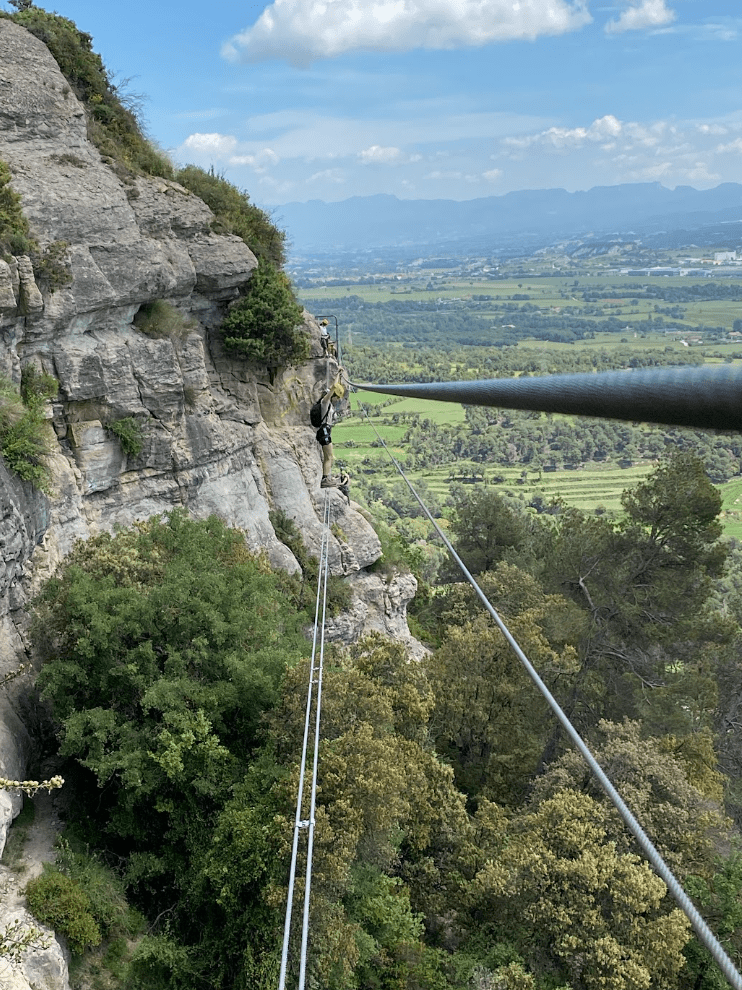
One of Catalunya's longest and most complete ferratas: vertical walls, hanging bridges and big exposure in Centelles, 45 minutes from Barcelona.
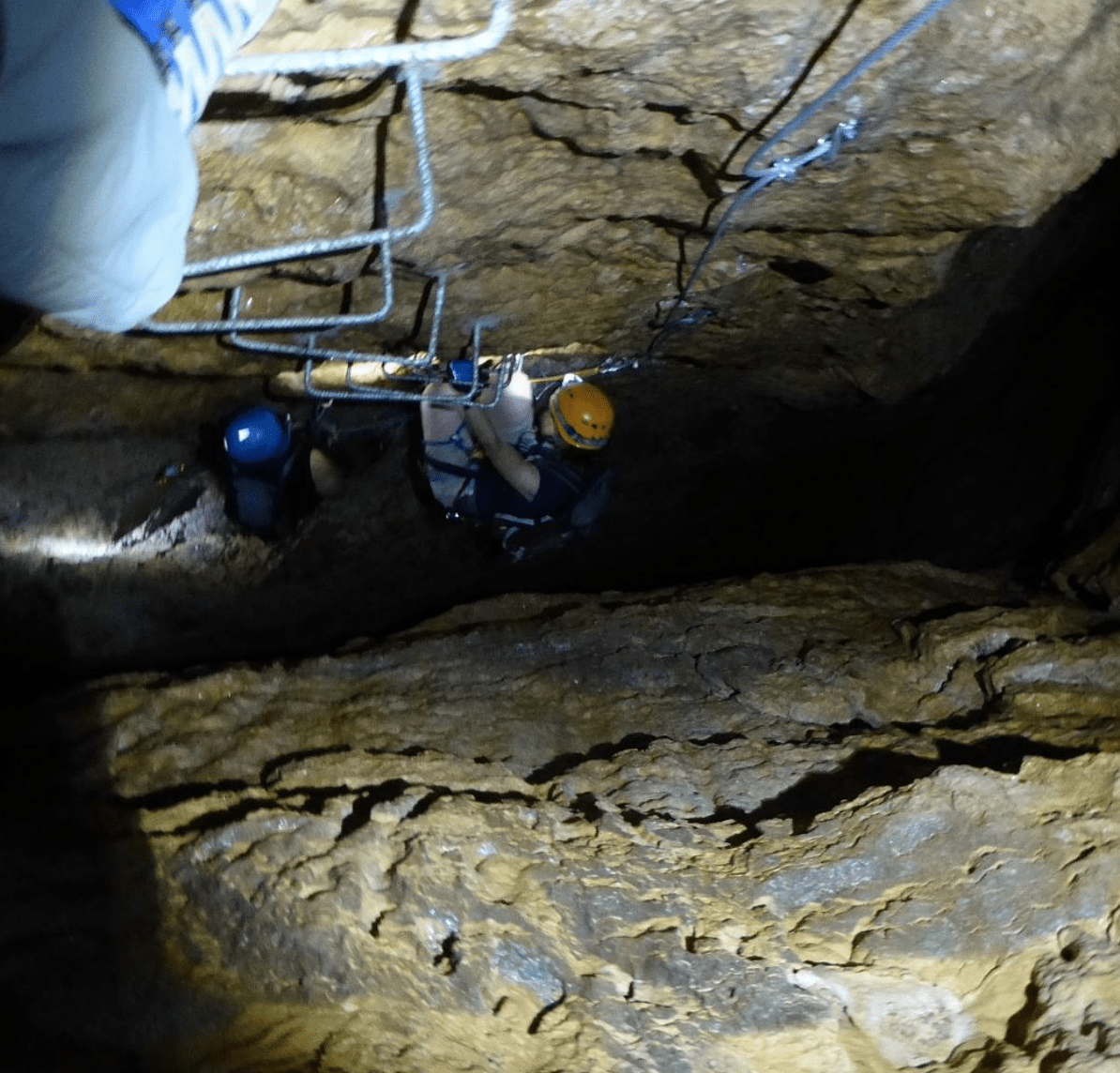
The ferrata with an underground section: bridges, overhangs and a cave traverse in the Prades mountains.
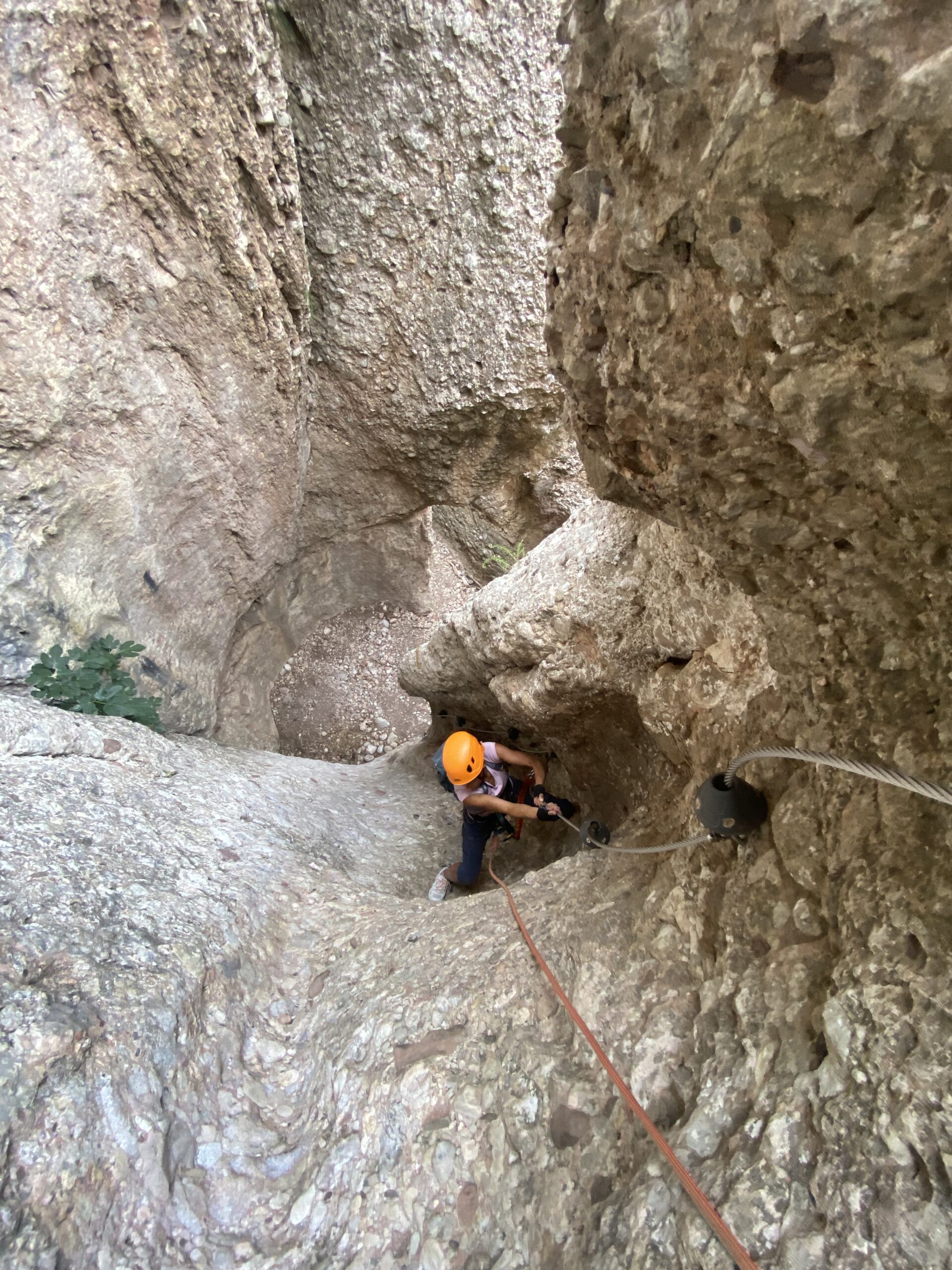
The only via ferrata in Montserrat: a short, explosive route up a dry canyon on the south face, finishing with a famously smooth chimney. Permit-restricted, 45 minutes from Barcelona.
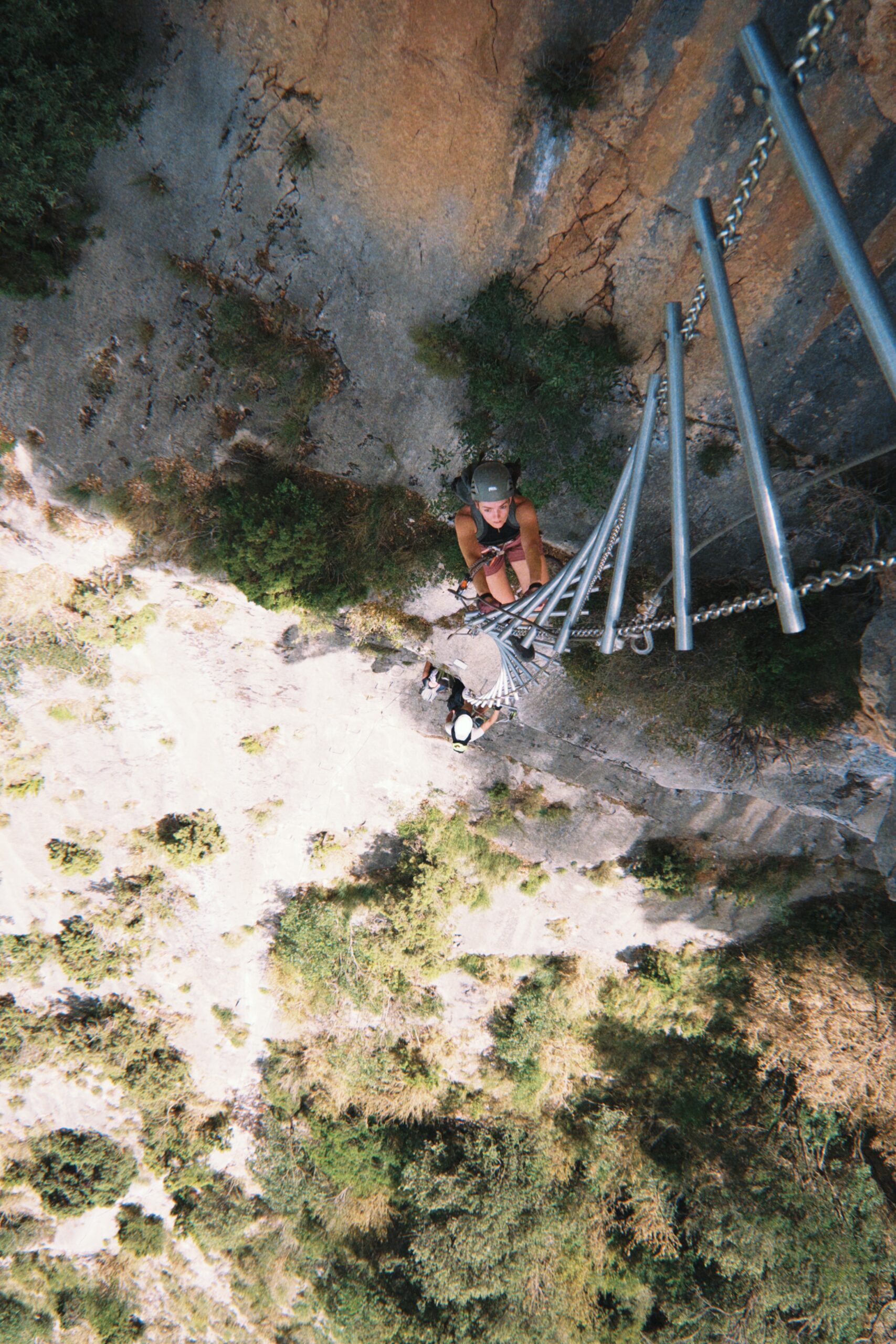
Catalunya's giant: over 1,000 m of ferrata and around 450 m of height gain at Fígols i Alinyà. A guided endurance test with huge Pyrenean views.
Via ferrata in Catalunya works nearly all year. Spring and autumn are ideal — mild temperatures and stable weather. Summer is very doable if we start early or pick shaded, north-facing routes, and canyon routes like Canal de las Damas stay noticeably cooler than open faces. Winter is fine on sunny days, though cold metal and short daylight make the harder routes less enjoyable. We never run a ferrata in rain or thunderstorm risk: wet rock and steel cables are a genuinely bad combination, and we'll reschedule rather than push it.
No. That's the whole point of the sport — the rungs, cables and ladders let you move through vertical terrain without any climbing technique. What you do need is reasonable fitness, a tolerance for heights, and the willingness to be taught a simple clipping system in the first ten minutes. On a guided day we cover all of it before you leave the ground.
You're attached to a continuous steel cable by two energy-absorbing lanyards for the entire route, so a slip means you stop, not fall. The real risks are objective ones: rockfall, weather, fatigue on harder routes, and clipping errors. A certified guide manages exactly those — checking your gear, teaching correct technique, reading the conditions and choosing when to turn around. Statistically it's a safe sport when done properly.
For K3 routes, if you can walk uphill for 45 minutes and pull yourself up a ladder, you're fine. K4 and above demand real upper-body effort — there are sections where you pull with your arms rather than step with your feet, and it's more tiring than people expect. If you're unsure, tell us and we'll be honest about which route suits you.
On easier routes, yes — many children enjoy it enormously. The practical limits are a minimum weight for the energy-absorbing lanyard to function as designed, and enough reach to move between rungs comfortably. Get in touch with your children's ages and we'll tell you honestly whether it's a good idea and which route to choose.
It depends what you want. Baumes Corcades in Centelles is the most complete all-rounder and only 45 minutes from the city. Canal de las Damas is the only via ferrata in Montserrat and the most atmospheric, though it's permit-restricted and physically demanding. Tossal de les Venes has a cave traverse that nothing else in the region offers. For a full-day endurance day, Roca Narieda in the Pyrenees is Catalunya's giant.
Yes — Canal de las Damas is currently the only one on the mountain, on the south face above Collbató. The older Teresina route was removed years ago. Access is regulated by the Montserrat park authority with a permit and a strict daily limit on numbers, which is one reason most people do it with a guide who handles the authorisation.
Cágate Lorito is widely considered the hardest and the best of the hard routes in Spain — K5+, with overhangs and monkey bridges that demand genuine strength. It isn't a route to attempt as your first or second ferrata. Canal de las Damas is easier on paper at K4 but catches people out because of its smooth final chimney.
Most of our routes are half-day activities: roughly 20 to 45 minutes of approach, one and a half to three hours on the cable, and a walk or rappel back down. Allow four to five hours door to door for a half day, and a full day for Roca Narieda, which is over a kilometre of ferrata.
We provide all the technical equipment — harness, energy-absorbing via ferrata lanyard and helmet. You bring comfortable shoes with good grip (approach shoes or trail runners are ideal; trainers are acceptable on easier routes), clothes you can move in, water, and a small pack. Gloves are strongly recommended, since steel cable is hard on the hands.
Layers you can move in and shoes with a proper grippy sole. Avoid loose or dangling clothing that can catch on cable and rungs, tie long hair back, and leave the jewellery at home. In summer, remember that the rock and metal get hot; in winter, bring gloves you can still clip in.
We don't run via ferrata in rain or when there's thunderstorm risk. Wet steel and wet rock are slippery, and a cable running up a mountain is not somewhere to be in a lightning storm. If the forecast turns, we'll contact you in advance and reschedule or refund — always.
Yes. Most routes run with a maximum of six people per guide, and some — Cágate Lorito and Canal de las Damas — are limited to four, either for safety or because of access permits. For larger groups we can run several guides in parallel; message us with your numbers and the date and we'll organise it.
Tell us your experience and what you're hoping to feel out there — we'll point you to the right one.
Get in Touch