
Five courses, one goal: turn experience into skill. From your first ropes outdoors to rescuing a partner on a multi-pitch, build the technical toolkit for a lifetime of climbing.
Every course below is led by a certified mountain guide, with technical gear included and small group sizes.
Whether you're taking your first steps onto real rock, sharpening your lead head, or learning the skills you hope never to use, you'll train with someone who teaches this for a living. Browse by category below, or get in touch and tell us your goal.
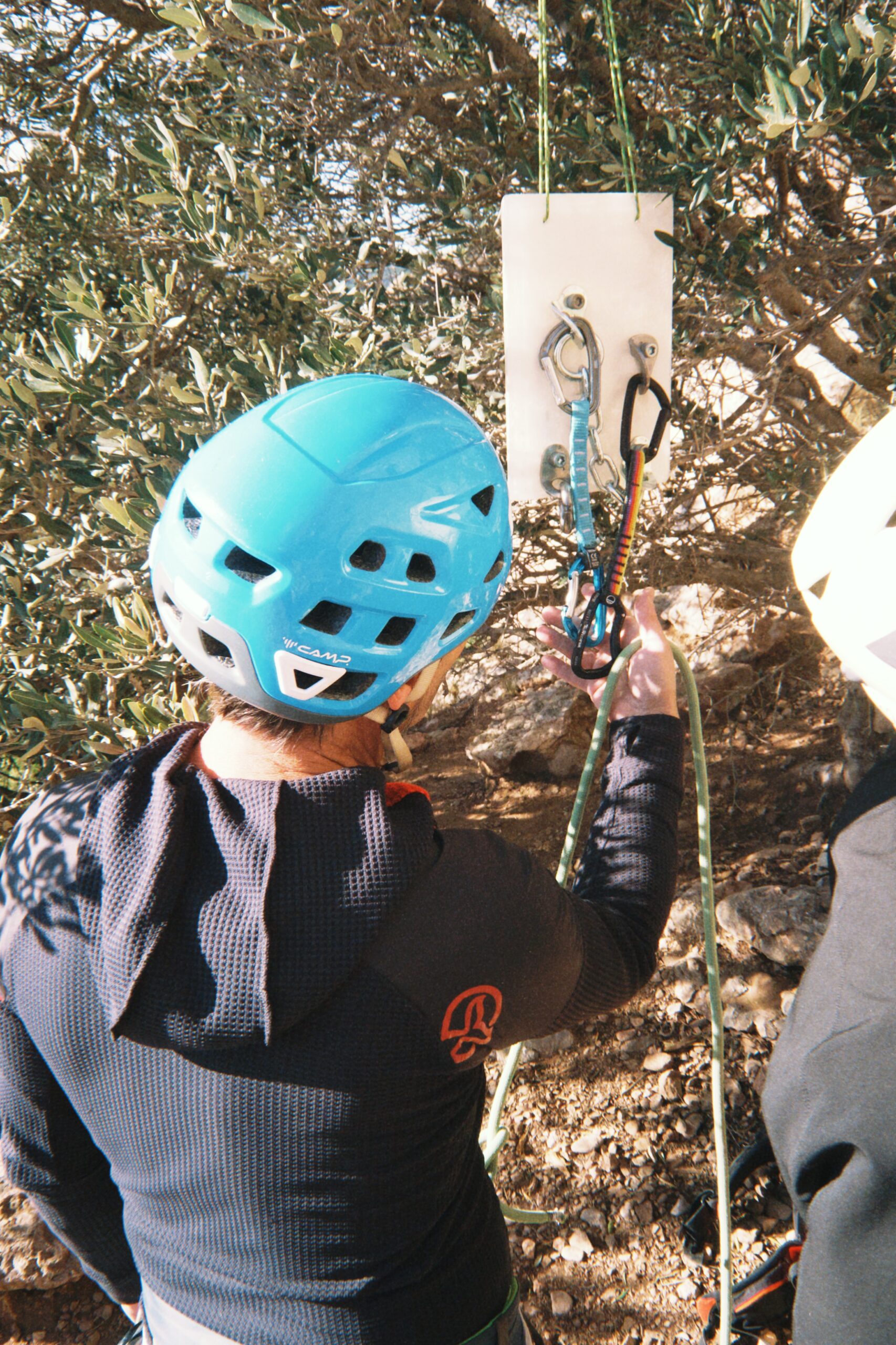
From zero (or from the gym) to climbing outdoors safely, on perfect teaching rock near Barcelona.
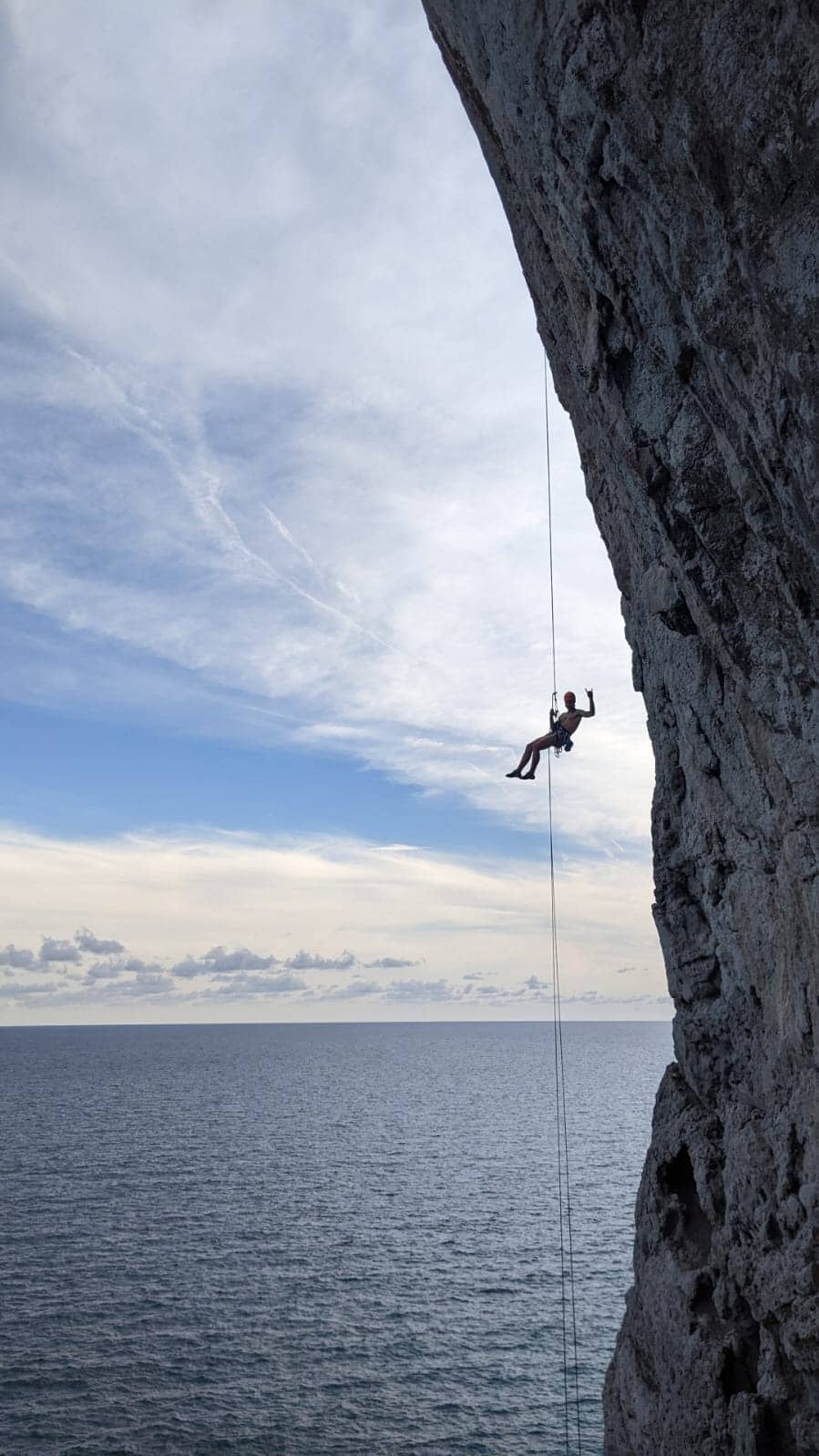
For climbers already leading: clipping tactics, falling practice, route reading, footwork and the mental game.
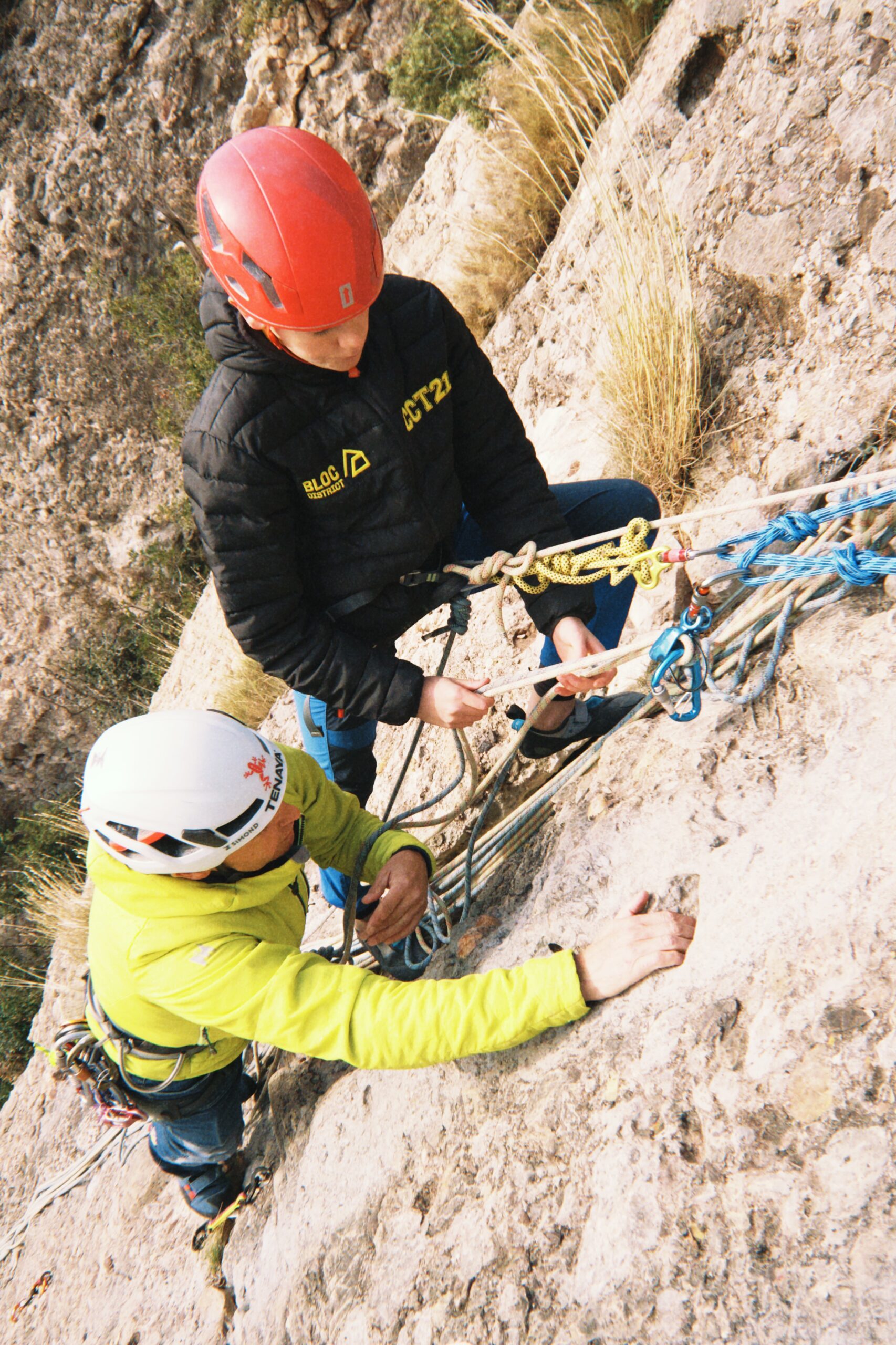
Everything that changes when the route has more than one pitch — skills on day one, a real supervised route on day two.
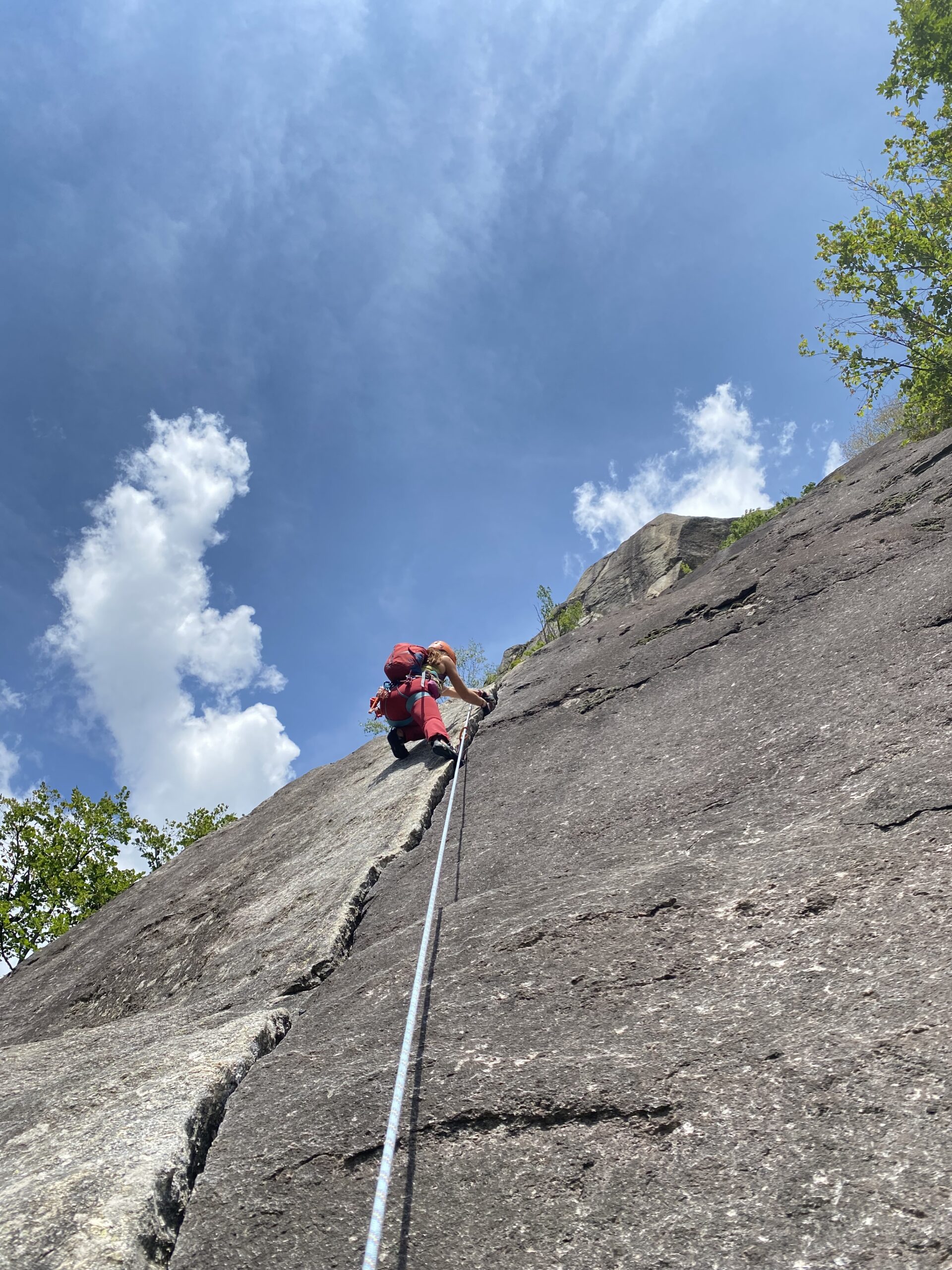
Cams, nuts, slings and judgement: the craft of protecting a climb with what the rock offers.
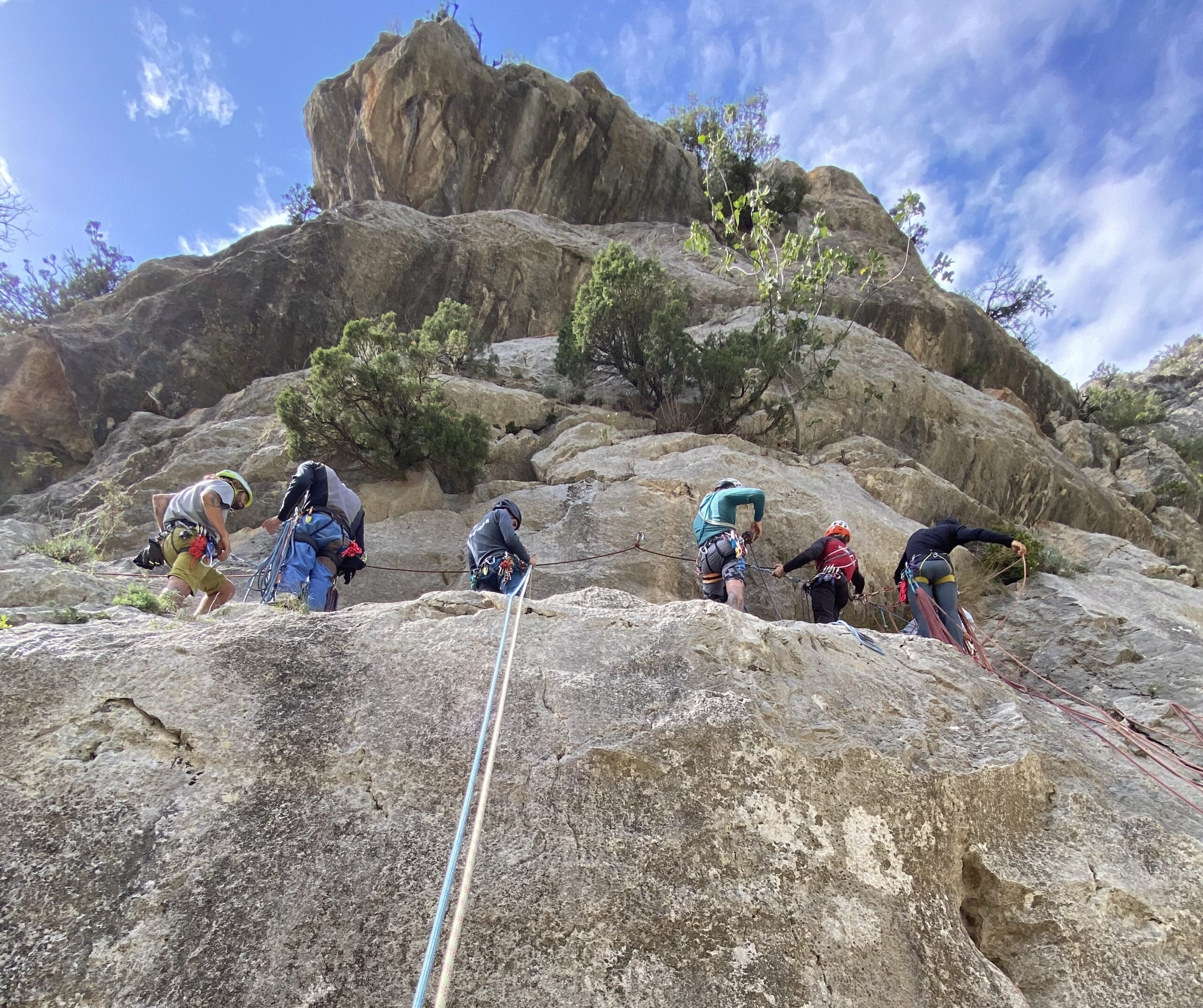
Escaping the belay, ascending the rope, assisted and counterweight rappels, rescuing an injured second.
How the courses fit together, what you'll actually be able to do afterwards, and what to expect on the day.
A guided day is us doing the technical work while you enjoy the climbing. A course is the opposite — you do the work, under close supervision, so you leave able to do it yourself. If you want a great day out, book a guided climb. If you want to become self-sufficient, take a course.
If you've never climbed outdoors, or only ever climbed indoors, start with the Sport Climbing Introduction — two days that take you from the gym to real rock. If you already lead sport routes and want to climb better, the Sport Climbing Improvement day sharpens technique and the head game. If you lead around V/5 and want to climb long routes, go to the Multi-Pitch Course.
There's a natural pathway, though you don't have to follow all of it. Sport Climbing Introduction gets you onto rock; Sport Climbing Improvement makes you a better leader; Multi-Pitch teaches you to climb long routes; Trad Climbing teaches you to protect them yourself; and Self-Rescue teaches you to solve problems when something goes wrong high up. Most people take them over a season or two, not a month.
Yes, and it's the most common reason people come to us. Indoor climbing builds the movement and the fitness; what's missing is everything around it — building anchors, cleaning routes, reading rock that has no coloured holds, and managing risk. The Sport Climbing Introduction course exists precisely for that gap, and gym climbers usually progress fast.
That's the goal, and it's honest to say it takes more than one course. After the Introduction you'll be able to climb outdoors safely with a competent partner. After Multi-Pitch and Trad you'll have the systems to lead your own routes. Real independence comes from doing it repeatedly afterwards — a course gives you the tools and the judgement to start, not a finished climber.
Yes. Leading is covered in the Sport Climbing Introduction at a basic level and developed properly in the Sport Climbing Improvement day, which covers clipping tactics, fall practice, route reading and the mental side. Leading on trad gear — placing your own protection rather than clipping bolts — is the Trad Climbing Course.
Traditional climbing means protecting the route with removable gear you place yourself — cams, nuts and slings — rather than clipping pre-placed bolts. You don't need it for sport climbing, but it opens up an enormous amount of Catalunya's classic terrain, particularly ridges and mountain routes where bolts simply don't exist.
If you climb multi-pitch routes, yes — genuinely. It's the one course people hope never to use and are very glad they took. Escaping a belay, ascending a rope or lowering an injured partner are not things you can improvise 100 metres up. A single day gives you systems you'll carry for years.
These are skills courses, not federation certifications. What you get is a guide's honest assessment of where you are and what to keep practising — most people leave able to build safe systems on their own. If you're pursuing a formal qualification, we can point you to the right federation pathway.
Small on purpose: usually two to four people per guide on the technical courses, up to six on the sport climbing days. Everyone gets real hands-on time rather than watching a demonstration from the back — which on a skills course is the whole difference between learning something and seeing it done.
Less than people expect. Courses are about skills, not endurance, so there's a lot of stopping, practising and repeating rather than long sustained effort. If you can walk uphill for half an hour and climb a few routes in a gym session, you have the fitness. What matters more is patience — you'll be tying knots and rebuilding anchors a lot.
No — technical gear (harness, helmet, rope, hardware, and trad rack where relevant) is provided on every course. Bring your own climbing shoes if you have them; we have loaner pairs otherwise. If you're thinking of buying your own kit, a course is the ideal moment to ask which pieces are worth it.
On the crags around Barcelona and across Catalunya, chosen for the teaching rather than the postcard — good anchors, sensible angles, room to practise. Multi-pitch and trad courses move to bigger terrain, including Montserrat and the Pyrenees, for the second day. Exact locations are confirmed close to the date, because conditions decide.
Yes. Every course can be run privately, for one person or a small group, which means the pace and content adapt entirely to you. It's a particularly good option for couples or regular climbing partners, since you learn the systems together and then actually use them together afterwards.
We reschedule or refund, no questions asked. Courses are more schedule-sensitive than guided days since they often run over consecutive days, so we build flexibility in where we can — and some skills sessions can move to sheltered ground rather than being cancelled outright.
Tell us where you're at and where you want to go — we'll point you to the right one. And if what you're after is bigger than a course — a whole season working toward one objective — take a look at our Mountain Programs.
Get in Touch